

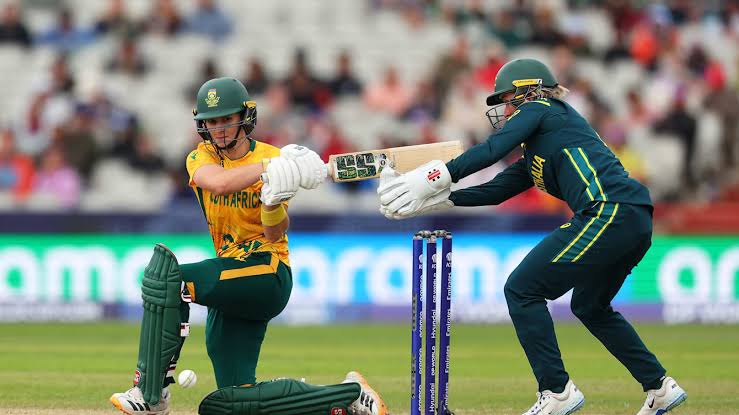
Cricket will return to the Olympic programme at Los Angeles 2028 after an absence of 128 years, with separate men’s and women’s T20 International tournaments. Each event will have six teams, a group-and-medal format, and a maximum squad size of 15 players per nation. The women’s competition is scheduled from 12 to 20 July 2028, followed by the men’s event from 22 to 29 July.
Why cricket’s Olympic return matters
For Indian supporters, LA 2028 will bring cricket into a sporting environment where every match contributes to a race for Olympic medals rather than a bilateral series or a conventional ICC title. The compact T20 format suits the Games calendar, while the six-team field creates immediate pressure: there will be little room for a slow start or an unimportant fixture.
Cricket’s inclusion was confirmed in October 2023 during the IOC Session in Mumbai. The decision covered both men’s and women’s events, making LA 2028 a significant moment for the women’s game as well as the men’s game. It is also a much broader tournament than the sport’s previous Olympic appearance, which involved only a men’s match between two entrants.
The Olympic setting changes how teams will be viewed. National selection, eligibility and representation are especially important because Olympic participation is based on National Olympic Committees, whereas international cricket has some teams that represent more than one territory. Great Britain, England and Wales, Ireland, and the West Indies are among the cases that make this issue more complex than in a normal ICC tournament.
The LA 2028 cricket format
Both Olympic cricket tournaments will be played as T20 Internationals. In T20 cricket, each side is allowed a maximum of 20 overs, or 120 legal balls, to bat. This format is designed for a shorter match day than 50-over cricket or Test cricket and is already familiar to audiences who follow international T20s and franchise competitions.
There will be six teams in the men’s event and six in the women’s event. The 90-player allocation for each gender means every competing nation can select a squad of up to 15 players. That makes a total of 180 cricketers across the two Olympic tournaments.
Group stage and medal matches
The six teams will be divided into two groups of three for the first phase. Teams will then play opponents from the other group who did not finish in the same position as them. The results of four matches will be used to form an overall final table.
The top two teams in that table will progress to the gold-medal match. The teams placed third and fourth will meet in the bronze-medal match. This structure means the group labels do not simply produce two direct semi-finals. Instead, every result across the first and second phases can affect the final rankings.
| Stage | Structure | Outcome |
| First phase | Two groups of three teams | Initial standings are established |
| Second phase | Matches against eligible teams from the other group | A combined final table is formed |
| Medal phase | First vs second; third vs fourth | Gold and bronze medals decided |
The women’s gold-medal match is scheduled for 20 July 2028, while the men’s gold-medal match is scheduled for 29 July. The bronze-medal matches are scheduled one day before each respective final.
When will the matches be played?
The women’s tournament is scheduled to begin on 12 July 2028 and run until 20 July. The men’s tournament will begin on 22 July and conclude on 29 July. The published schedule includes match start times of 9:00 and 18:30 Pacific Daylight Time.
For viewers in India, those start times correspond to 21:30 IST and 7:00 IST. The evening Pacific start is therefore likely to be the more convenient live window for Indian audiences, while morning matches in Los Angeles will fall early in India. The timing may influence how supporters follow squad announcements, team combinations and match build-up.
Short tournaments also encourage close attention to form and selection. Discussions around who will win today match prediction often focus on recent results, but an Olympic event will additionally demand careful consideration of the unusual competition structure, limited number of matches and the weight of net outcomes in the final table.
How qualification works
The qualification system is based largely on geography, with direct places intended to cover Africa, Asia, Europe and Oceania, alongside a pathway involving the United States as host. The final positions not decided through direct qualification will be settled through Global Qualifier tournaments in 2027.
For the men’s event, the highest-ranked teams from Africa, Asia, Europe and Oceania in the ICC Men’s T20I Team Rankings on 31 December 2026 will qualify. The United States can receive the host quota if it is among the top 15 sides in the relevant rankings during the qualification period from 30 June to 31 December 2026. A Global Qualifier in 2027 will determine the final place or places.
As of 14 October 2026, the men’s direct qualifiers have not been confirmed because the ranking cut-off is still to come. That makes the final months of 2026 important for teams competing for continental places, as the Olympic field is limited to only six sides.
Women’s qualification position
The women’s route uses continental outcomes from the 2026 Women’s T20 World Cup for four direct places. Australia qualified from Oceania, Great Britain qualified through England from Europe, India qualified from Asia, and South Africa qualified from Africa.
One further women’s place is linked to the hosts. The United States will receive it if the side meets the required ranking condition; otherwise, the highest-ranked side not already qualified will take that berth. The final women’s place will be decided through a qualifier in 2027.
This means India’s women have already secured a place at LA 2028 through the Asian qualification route. The men’s qualification status remains unresolved until the end-of-year ranking date and the subsequent qualifying process.
Venue: Pomona in Los Angeles County
The cricket matches are scheduled for Knight Riders Cricket Ground at Fairplex in Pomona, California. The venue is within Los Angeles County, allowing cricketers to remain connected to the wider Olympic set-up rather than staging the competition in another part of the United States.
The stadium was planned to be expanded to a capacity of 15,000 for the Olympics. A dedicated cricket venue gives the sport a clear home during the Games and avoids the need to adapt a baseball or multi-purpose stadium for every match. The location also gives the event a single focal point for both tournaments.
Cricket’s brief Olympic history
Cricket appeared at the 1900 Paris Olympics, where Great Britain defeated France by 158 runs in a two-day match. Only two teams ultimately competed. The British side was represented by the Devon and Somerset Wanderers Cricket Club rather than a nationally selected England team, while France’s team was largely made up of English expatriates.
The match was played with 12 players per side and did not have first-class status. Great Britain won the gold medal and France received silver; there was no bronze-medal match. Cricket had also been planned for the 1896 Olympics in Athens, but insufficient entries led to the event being cancelled. A proposed tournament at the 1904 Games was also cancelled.
LA 2028 will therefore be only the second Olympic cricket edition, but it will differ greatly from Paris 1900. It will feature men’s and women’s T20I tournaments, six teams in each competition, formal qualification routes and medal matches for gold and bronze.
Cricket’s Olympic comeback combines a familiar T20 format with an unfamiliar medal-driven challenge. India’s women have qualified, the men’s race is still developing, and every participating side will have a limited but high-stakes path towards an Olympic podium.
