

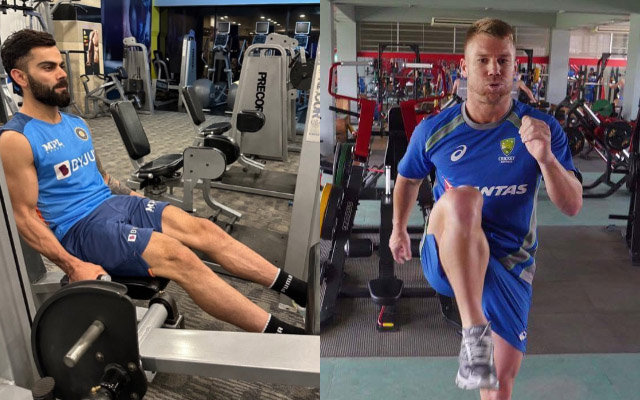
The fittest cricketers are not defined by appearance alone. Elite cricket fitness combines repeat-sprint speed, stamina for long days, strength for batting and bowling, mobility, recovery and the ability to stay sharp while fielding. Virat Kohli, Ben Stokes, Pat Cummins, Kagiso Rabada, Ravindra Jadeja, David Warner, Faf du Plessis, Hardik Pandya, Jofra Archer and Shakib Al Hasan have all been recognised for different versions of that demanding standard.
What makes a cricketer genuinely fit?
Cricket asks different physical questions of every role. An opening batter may need to maintain concentration and movement for hours. A fast bowler needs explosive power repeatedly, then enough robustness to complete long spells. An all-rounder must carry workloads in batting, bowling and fielding, often in the same match. Meanwhile, fielders require acceleration, balance, quick reactions and accurate throwing under fatigue.
Therefore, there is no universal measurement that settles the debate over the world’s fittest cricketer. A player’s value lies in how well their body meets the needs of their role. A fast bowler who can sustain pace, a batter who repeatedly converts ones into twos, and a fielder who covers ground all demonstrate useful, cricket-specific fitness.
Modern training is also broader than gym work. Strength development matters, but it needs to sit alongside cardiovascular conditioning, sprint work, flexibility, mobility and planned recovery. Nutrition, rest and rehabilitation are equally important because a packed schedule can make availability as valuable as raw athletic ability. Fitness is ultimately measured by repeatable performance rather than a single impressive workout.
Ten cricketers associated with elite conditioning
Virat Kohli: discipline, running and all-round movement
Kohli has become a widely recognised benchmark for cricket fitness because of his lean conditioning, swift running between the wickets and active fielding. His approach has been associated with strength training, a clean diet and consistency rather than one specialised skill. He was also noted for combining cardio and weight exercises, while treating rest as an important part of the routine.
The useful lesson from Kohli’s example is balance. Cricket requires muscular strength, but players also need to move freely and sustain high intensity across a long innings. His fitness profile shows why efficient running and alert fielding are as meaningful as visible muscle. For Indian cricket followers, it also illustrates how individual standards can influence the wider conversation around preparation.
Ben Stokes: strength matched with endurance
Stokes’ all-round role places exceptional demands on his body. He has been associated with training that prioritises strength, power and endurance—qualities that support long bowling spells, forceful batting and energetic fielding. His profile also highlights the importance of mental resilience, particularly through periods of injury and return.
For an all-rounder, fitness cannot be compartmentalised. A player may bowl first, field for extended periods and still need to bat in a high-pressure situation. Stokes represents the value of building a body that can produce force when required without losing the endurance needed to contribute across a match.
Pat Cummins: fast-bowling durability
Cummins is associated with a fast bowler’s essential combination: pace and durability. His conditioning has been described in terms of core stability, leg strength, upper-body work and cardiovascular fitness. Each component supports the repeatable movements required in a bowling action, particularly when spell lengths and match demands increase.
Fast bowling is not simply a test of speed. It also depends on maintaining control and physical rhythm over time. Core and lower-body strength help transfer force through the action, while aerobic conditioning helps a bowler recover between deliveries, overs and spells. Cummins’ profile is a reminder that durability is a key measure of elite pace fitness.
Kagiso Rabada: explosive power with mobility
Rabada’s fitness has been linked to explosive lower-body power, rotational strength and flexibility. That combination suits a quick bowler: the legs generate momentum, rotational strength supports the movement through the action, and mobility helps the body move through its full range. Agility in the field adds another practical layer to his athletic profile.
The emphasis on flexibility is particularly relevant. Strength without adequate movement can limit efficiency, especially for bowlers repeatedly placing stress on the same areas. Rabada’s example suggests that performance preparation should not focus solely on gym lifts; mobility and injury-prevention work belong in the same programme.
Ravindra Jadeja: fielding athleticism and functional strength
Jadeja’s reputation rests heavily on quick reflexes, speed across the ground and throwing accuracy. His training has been associated with sprint work, plyometrics and functional strength. These are fitting priorities for a player whose role can shift rapidly between bowling, batting and high-intensity fielding.
Plyometric exercises focus on explosive movements, while sprint training develops acceleration and repeat speed. Functional strength aims to support the movements players actually use on the field. Jadeja’s fitness standard is especially relevant to young cricketers: sharp ground fielding is built not only through catching practice but also through balance, speed and coordinated movement.
David Warner: high-intensity running and core work
Warner’s physical transformation has been linked with high-intensity interval training and core workouts. Those methods support his speed between wickets and movement in the field. High-intensity interval training uses short, demanding periods of effort followed by recovery, making it relevant to the stop-start nature of limited-overs cricket.
Core strength is often misunderstood as an aesthetic goal, but its cricketing value is stability. It supports running, batting movements, throwing and body control while changing direction. Warner’s example underlines how a batter can benefit from training designed to make short bursts of effort more efficient and repeatable.
When considering a match, fitness and recent workload can be useful context alongside form, team balance and conditions. Resources such as dream 11 today match prediction are often used by followers who want to compare those match-day factors before forming a playing combination.
Faf du Plessis: longevity through mobility and conditioning
Du Plessis has been noted for remaining in strong physical condition into his late thirties. His reported priorities include strength training, mobility work and endurance running. This blend is sensible for players aiming to sustain performance over a long career, especially when travelling and participating in multiple formats or competitions.
Mobility helps a player retain quality of movement, while endurance work supports recovery and long periods in the field. Strength remains important because it supports powerful batting and resilient movement. Du Plessis demonstrates that elite fitness is not only about peak intensity; it is also about habits that can be sustained over many seasons.
Hardik Pandya: rebuilding around functional movement
Pandya’s fitness journey has included recovery from major injuries and a return built around core stability, explosive strength and functional movements. These qualities suit an all-rounder who must bat aggressively, bowl at pace and field dynamically. His profile places rehabilitation and progressive rebuilding alongside performance training.
A return from injury should not be judged only by whether a player gets back on the field. The larger goal is to regain the capacity to perform their specific role safely and repeatedly. Pandya’s experience reflects an important fitness principle: a successful programme adapts to the athlete’s history, workload and cricketing responsibilities.
Jofra Archer: explosiveness and rehabilitation
Archer’s athletic profile has been associated with bowling explosiveness, sprint speed and flexibility. Injuries have also made rehabilitation a central part of the conversation around his conditioning. For fast bowlers, rehabilitation is not separate from fitness; it is one of the processes that helps restore movement quality and manage the physical demands of pace bowling.
His case demonstrates why it is unhelpful to describe fitness only in terms of uninterrupted availability. An athlete can show commitment through structured recovery work as well as through training at full intensity. The aim is to develop the capacity to bowl fast and move freely without ignoring the body’s need for recovery.
Shakib Al Hasan: the all-rounder’s balanced base
Shakib has been associated with functional strength, agility and stamina—three qualities that help an all-rounder contribute consistently across disciplines. Batting needs control and repeat running, bowling needs a stable and repeatable action, and fielding demands quick movement. A balanced programme is therefore more valuable than a narrow focus on one physical attribute.
This is an instructive model for club players too. Rather than copying an elite player’s exact sessions, they can identify the relevant principles: develop general strength, practise moving quickly in multiple directions, build stamina gradually and ensure that training complements cricket skills rather than replacing them.
Fitness standards worth taking from the elite game
The strongest common thread among these players is not one body type or a single routine. It is purposeful preparation. Fast bowlers need durability, explosive force and mobility. Batters benefit from speed, core stability and endurance. Fielding excellence relies on acceleration, reactions and efficient movement. All-rounders require a broad physical base because their workload is naturally varied.
For amateur cricketers, the practical standard is not to reproduce professional volume. It is to train consistently, improve movement quality, allow rest and build capacity gradually. A qualified coach or trainer can help tailor a programme to an individual’s age, injury history and playing role. The best routine is one that improves cricket performance while remaining sustainable.
The fittest cricketers in the world offer different models rather than a definitive ranking. Kohli represents disciplined all-round conditioning, Jadeja reflects fielding athleticism, Cummins and Rabada show fast-bowling robustness, while Stokes, Pandya and Shakib demonstrate the demands of all-round roles. Their shared message is simple: elite cricket fitness is built through strength, speed, stamina, mobility and recovery working together.
